Smooth or Toothed Paper for Graphite Sketching
Smooth or toothed paper for graphite sketching affects line clarity, shading and erasing. Compare a few marks to choose the surface that suits your drawing.
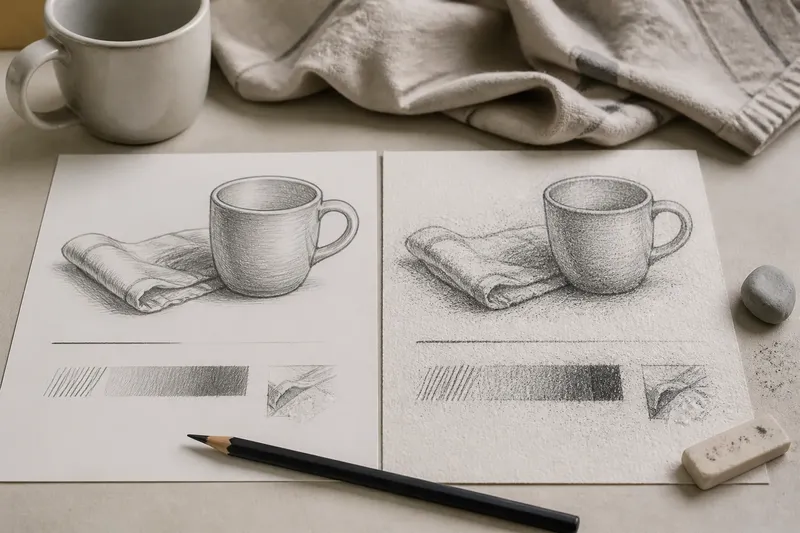
Which paper gives you the graphite marks you want? Smooth or toothed paper for graphite sketching can make the same pencil line look crisp and continuous or grainy and broken. The useful choice is the sheet that suits your marks, not a week-long trial with a timetable.
What does paper texture change?
Smooth paper has a relatively level surface; toothed paper has more pronounced rises and hollows for graphite to catch on. These are ends of a range, rather than two uniform types. A sheet described as smooth may still show grain, while a textured one may feel quite gentle under the pencil.
On smooth paper, a sharp point tends to make clean, continuous lines. Close hatching and small details are easier to keep distinct. Layered shading can look even, although pressing hard may polish the surface and leave a shiny patch that accepts later marks unevenly.
On toothed paper, strokes pick up the surface’s raised fibres. Light marks can look broken; repeated layers darken the hollows and leave a more visible grain. That texture can suit loose tonal work, but crowded shading and tiny details may become harder to read.
Think of paper tooth like the ridges on a doormat: they affect where a mark catches, rather than simply sitting beneath it. The comparison is imperfect, but it makes the paper’s part in the result clear.
Which surface suits your drawing?
Choose smooth paper if your drawing depends on fine hatching, precise edges or small features. A sharp or harder pencil can help make controlled lines, but pressure still matters. A firm stroke may flatten the surface and make later corrections less cooperative.
Choose toothed paper if you want visible pencil grain, broken edges or tone built from overlapping marks. Light sweeps, short hatches and soft layers can remain distinct rather than merging immediately. Very rough tooth may interrupt faint, close-set marks, however; an extremely smooth sheet can make a loose study look more controlled than intended.
Neither surface is inherently better for a portrait, landscape or still life. Decide by the finish you want and the way you draw. If you like both, keep them for different jobs rather than asking one sheet to do everything.
How can you compare paper without a long trial?
Use a small, repeatable sample on each candidate sheet. Choose one pencil and a simple subject with an edge, a shaded area and a small detail, such as a mug beside a folded cloth. Label the sheets. On each, draw the same few marks: a line, a patch of hatching, a light-to-dark passage and one small correction with a clean, soft eraser. Keep your pressure comfortable and your pencil point similar.
Then compare what you can see, not which sheet feels more pleasant in the hand. Note whether the line stays clear, whether the shading looks even or visibly grainy, and whether the eraser lifts the mark without disturbing the surface. A hard or well-sharpened pencil can make a clean mark, but pressing firmly to darken it may flatten the grain and make correction less effective. If you need force to get the result, that is useful evidence that the surface or approach may not suit the drawing.
- Line: Check whether a stroke is continuous or visibly broken. If you need crisp edges and it breaks up, try a smoother sheet; if you want a grainy line, keep the toothed sheet.
- Detail: Check whether a small feature remains distinct beside shading. If it disappears, move to a smoother surface or leave more space around it; otherwise, the current tooth is workable.
- Tone: Check whether layered shading looks even or mottled. If you want an even passage and the grain remains prominent, try smoother paper; if the visible texture suits the drawing, keep it.
- Surface: Check for a shiny patch after darkening. If one appears, ease the pressure or build tone with lighter layers; if the surface stays receptive, continue with the same approach.
- Correction: Check whether a small erased mark lifts cleanly or leaves residue and disturbed fibres. If correction matters and the surface roughens, try a gentler touch or another sheet; if the mark lifts acceptably, it is suitable for that kind of edit.
- Overall fit: Check which sheet gives you the intended combination of line, detail and tone with fewer adjustments. If neither does, change the pencil point or technique and compare again; if one fits, choose it for that kind of work.
Which questions help settle the choice?
Is smooth paper better for detailed graphite drawing?
It can make fine lines and small details easier to keep distinct because the pencil meets fewer pronounced hollows. Point sharpness and pressure still matter; a broad stroke can obscure a small feature on any paper.
Does toothed paper need more passes for an even tone?
Its texture can leave graphite caught in hollows, so some marks may take extra layers to look even. The result depends on the sheet and the finish you want, so judge the visible tone rather than treating tooth as a fixed rule.
Can I use the same pencil on both surfaces?
Yes. Using the same pencil and a similar point makes it easier to see what the paper changes. Once you have compared the sheets, adjust the point or pressure to suit each one.
What if I like both finishes?
Give the papers different jobs. Use a smoother sheet for close detail and a toothed one for visible grain or layered marks; there is no need to make one surface win every drawing.
What if the pencil and paper seem to disagree?
Make one small adjustment at a time. Sharpen the pencil if detail looks blunt, lighten your touch if the surface looks polished, or add a gentle layer if a pale mark looks broken on textured paper. If the desired effect still takes force, try another surface rather than pressing harder.
Say you want to draw a shaded bowl with a crisp rim, and your toothed paper makes the rim look uneven. Keep the same sheet and pencil, sharpen the point, then draw the rim with a lighter stroke; use broader, layered marks for the bowl’s shadow. The expected result is a clearer edge with some grain still visible in the shading. If the rim remains too broken, switch to smoother paper for the whole drawing or reserve it for the edge study.
How should you choose your everyday sheet?
Choose the surface that supports the marks you make most often. Smooth paper favours crispness and close control; toothed paper favours visible grain and layered texture. If your work varies, keep a labelled sample of each so you can compare the actual marks when a particular finish matters.
For smooth or toothed paper for graphite sketching, a short side-by-side sample is usually enough to make the decision. Check the line, detail, tone and correction, then choose the sheet whose trade-offs suit the drawing. Paper is a material choice, not a test of resolve.